Slow Drains That Keep Coming Back: When to Jet Instead of Snake
QUICK ANSWER: A drain snake, also called a cable machine, punches a hole through a clog and restores flow quickly, which is the right tool for a single sudden blockage such as a hairball or a stuck object. Hydro jetting uses pressurized water through a nozzle to scour grease, scale, and root growth off the full inside wall of the pipe, which is the better choice when the same drain slows down again within weeks or months. A repeat clog usually means the pipe wall is still coated and the opening is simply narrow again. Running a camera through the line before choosing a method shows whether the pipe is coated, rooted, or damaged, and a damaged pipe needs repair rather than any cleaning method.
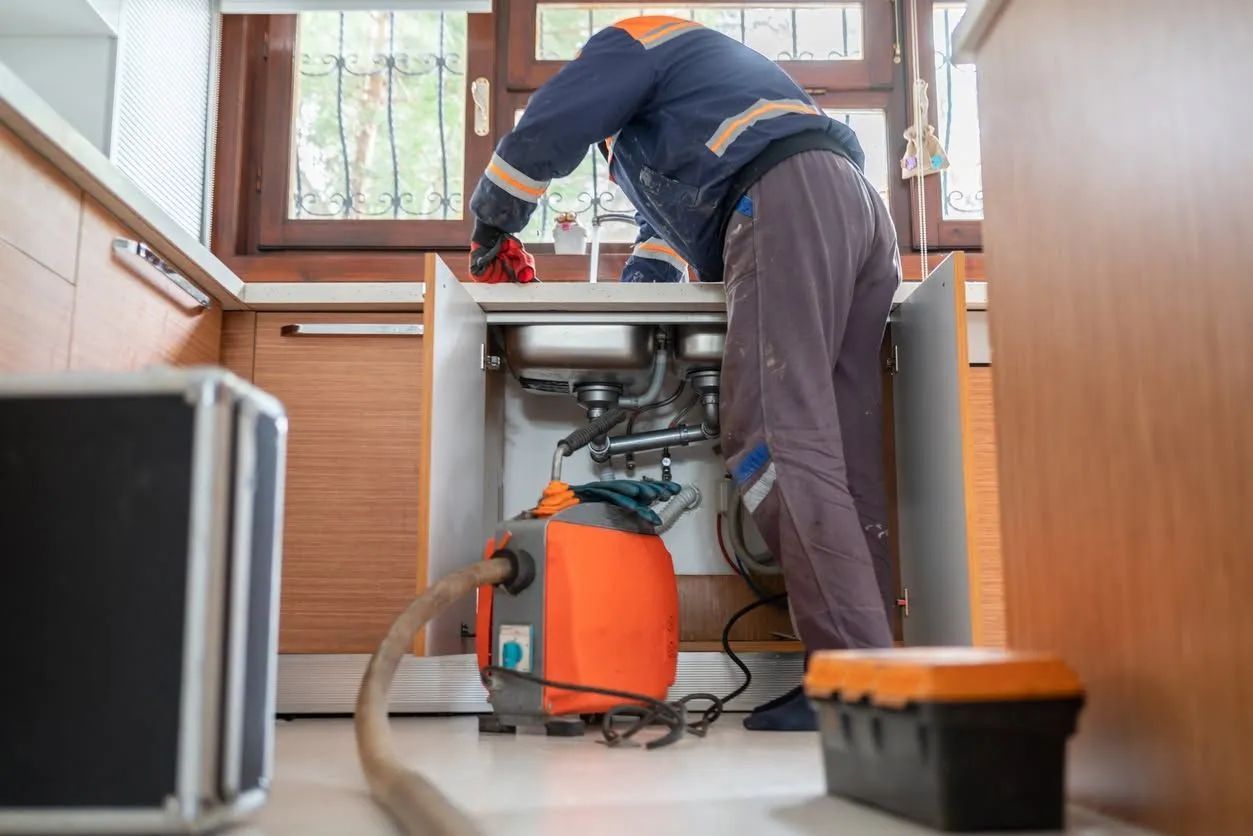
The kitchen sink drained fine on Monday. By Friday it is sitting in a slow circle again, the same way it did six weeks ago, and three months before that. Someone ran a snake through it each time, the water went down with a satisfying gurgle, and the problem stayed gone for exactly as long as it took the pipe to narrow back down. Nothing about the drain is broken in the way a cracked pipe is broken. It is just filling back up with the same material, on a schedule, because the cleaning method used each time was never designed to remove it.
That pattern is one of the most common calls a plumbing crew gets, and it has a mechanical explanation. A snake and a hydro jet do different jobs to different kinds of buildup. Using the wrong one for the situation is not wasted effort so much as an incomplete fix that comes with a return visit built in. Knowing which tool matches which problem makes the difference between a drain that stays clear and one that becomes a recurring chore.
What a Snake Actually Does Inside the Pipe
A drain snake is a coiled steel cable, driven by a motor or turned by hand, with a cutting or hooking head on the end. It feeds into the line until it meets resistance, then the head bores through or grabs whatever is blocking the way. When the clog is a single mass, such as a wad of hair in a tub trap, a toy a child flushed, or a plug of paper and wipes, the snake does the job cleanly. It either breaks the mass apart, hooks it and pulls it out, or pushes it through to a larger pipe where it no longer matters.
The limitation is built into the shape of the tool. A cable is a narrow line moving through a wider pipe, so it cuts a channel through the middle of whatever is in there and leaves the rest alone. Picture a thick layer of grease or scale lining a four inch pipe. The snake drills a hole about the width of its head down the center and the water drains again, but the walls on either side of that hole are still coated. The usable diameter of the pipe has not changed much, so it does not take long for new debris to catch on the remaining buildup and close the gap.
This is why a snaked drain can look fixed for a short window and then slow down the same way. The blockage was cleared, but the condition that caused the blockage was not touched.
What Hydro Jetting Does Differently
Hydro jetting replaces the cable with a hose and a nozzle that sprays pressurized water in several directions at once. Some of the jets point backward, which pulls the nozzle forward through the line, and others angle outward to strike the pipe wall all the way around. The water does the cutting, and it does it along the entire circumference of the pipe instead of down a single channel.
Our jetters cut through root masses, hardened grease, and scale, and the flushing action carries the loosened material downstream and out of the line instead of leaving it as a loose pile to resettle. A pipe that was working at half its diameter can come back to something close to its full interior, which is the real reason the drain stays clear longer. There is simply a lot more room for water to move before the next round of buildup becomes a problem.
That scouring action matters most with material that sticks. Grease cools as it travels through a drain and sets up on the pipe wall like candle wax. Mineral scale builds in layers, much like what forms inside a kettle. Fine roots enter through joints and spread into a mat that catches everything that passes by. A cable pushes through these, while a jet strips them off. For the same reason, jetting is also the better tool for long horizontal runs, where debris tends to settle in the low spots and a snake only reaches the first obstruction it meets.
Signs a Drain Needs Jetting Instead of Another Snaking
The clearest signal is repetition. A single clog that clears and stays gone was probably a single clog. A drain that slows down again within a few weeks or months is almost always dealing with buildup on the walls, and a second or third snaking tends to produce the same short lived result as the first.
Several other patterns point the same direction. Slow drains at more than one fixture, especially ones on the same branch line, suggest the restriction is in a shared pipe and not in the trap beneath a single sink. A gurgling sound when another fixture drains means air is being pulled through a line that has narrowed. A kitchen line that smells of old grease even after it drains, or a main line that backs up during heavy use like laundry day or a house full of guests, is usually carrying a coating that a cable has been passing through for years.
TIP: When a drain clears after snaking but slows again, note how long it took. Days or a couple of weeks usually points to a partial clearing or an object still caught in the line. Several months of decent flow followed by a slow return points to wall buildup, which is the case where jetting tends to change the outcome.
Why Tree Roots and Older Pipe Change the Answer
In San Francisco and across the Bay Area, a large share of the housing stock was built decades ago, and the sewer laterals under those streets are often clay or cast iron. Both materials develop joints and rough interior surfaces over time. Clay pipe is laid in short sections, and every joint is a place where fine roots can find moisture and enter. Cast iron corrodes from the inside, forming a rough layer of tuberculation that catches debris like a rasp.
A root mass in a clay lateral is a good example of where the two methods part ways. A snake with a cutting head can chop through the middle of the mass, and flow returns, but the root fibers remain attached at the joint and regrow. They tend to thicken after being cut, and the next clog arrives faster than the last. A jet clears the fibers from the pipe wall and from inside the joint opening, which slows the regrowth cycle considerably, though it does not stop roots from returning if the joint itself remains open.
Rough cast iron presents a similar situation. A cable passes through the scale without removing it, while a jet can strip loose scale back to firmer metal and restore the interior surface. Removing that layer also changes how debris behaves afterward, since a smoother wall gives paper and grease less to snag on.
When Jetting Is the Wrong Choice
Jetting is not the answer to every slow drain, and a good diagnosis includes knowing when to leave the jet on the truck. A pipe that is cracked, collapsed, belled out at a joint, or sagging into a low spot, which plumbers call a belly, has a structural problem that cleaning will not solve. Water sent through a pipe with a failed section can flush soil and debris into the line instead of carrying it out. A belly will hold standing water no matter how clean the pipe wall is, and the debris that settles there will keep building up.
Very old or fragile pipe also deserves caution. A line that has been neglected for decades may have walls that are thinner than they appear from the outside, and the decision to jet it should come after the line has been looked at, not before.
WARNING: Do not run a pressure washer, a rented jetter, or a garden hose attachment into a sewer line without knowing its condition. Aggressive water through damaged pipe can worsen a break, and a clog that was only partly cleared can push back into the house through the lowest fixture.
The Camera Comes First
The most useful step before choosing a method is often the least dramatic one. A camera on a flexible cable travels through the line and shows exactly what is inside, whether that is a coating of grease, a root intrusion at a joint, a collapsed section, or a clean pipe with an offset where two sections have shifted apart. What is on the screen decides the plan.
If the picture shows grease or scale across the walls, jetting is the logical next step. If it shows a single obstruction in an otherwise healthy pipe, a snake may be all that is needed. If it shows a break, a belly, or a joint that has separated, the repair becomes the priority, and cleaning is a temporary measure at best. A camera pass after jetting also confirms the pipe is genuinely clear, which beats assuming it is because the water went down.
For a house with a long history of slow drains, or one that has been snaked repeatedly without a lasting result, starting with the camera replaces a guess with information. It also locates the problem, so that if the answer is a repair, the work happens at the right spot and does not cost extra digging.
What Keeps a Cleaned Line Clear Afterward
Even a freshly jetted line will build up again if the same habits continue. Kitchen drains handle grease best when it never reaches them, so pouring cooking fat into a can instead of down the sink makes a large difference over time. Wipes labeled flushable do not break down the way toilet paper does, and they are a frequent core of the mats that form in older laterals. A drain strainer in the shower and the kitchen sink catches hair and food before it enters the line.
Trees near the lateral are a separate matter. If roots have found a joint, jetting clears them, but the entry point is still there. Some lines settle into a pattern of periodic jetting to keep roots from taking over, while others reach the point where replacing a failed section makes more sense. A camera inspection shows which situation applies.
Frequently Asked Questions
Is hydro jetting safe for older pipes?
It depends on the condition of the pipe, not just its age. Sound clay and cast iron can usually be jetted with matched pressure and nozzles. Cracked or collapsed pipe should be checked with a camera first.
Why does my drain clog again a few weeks after snaking?
A snake cuts a channel through a blockage but leaves most of the buildup on the pipe wall. That remaining coating narrows the pipe, so new debris catches quickly and the drain slows down again.
Can a snake clear tree roots?
A cutting head can chop through the center of a root mass and restore flow for a time. The fibers stay attached in the joint and regrow, while jetting removes more root material from the wall and joint.
Will jetting damage my plumbing?
When the pipe is sound and the equipment is matched to it, jetting is a standard, well established method. Damage usually comes from using it on pipe that was already failing, which a camera inspection helps rule out.
How do I know if the problem is in one fixture or the whole line?
If one sink or tub is slow while everything else runs normally, the restriction is likely in that fixture's trap or branch. Several fixtures slowing, gurgling, or backing up together point to a shared or main line.
Does a drain that smells bad need jetting?
A persistent odor from a drain that flows often means grease or organic buildup coats the pipe wall, which jetting scours off. A dry trap or venting issue can also cause odor, so confirm the source first.
Choosing the Right Tool Keeps Drains Running Clear
A snake and a hydro jet are not rivals so much as tools built for different jobs. One opens a path through a single obstruction, while the other restores the pipe by cleaning the walls the obstruction was clinging to. When a drain keeps slowing down again, the repetition is the clue that the walls are still coated. The useful question shifts from how to clear this clog to why the pipe keeps filling back up.
A camera answers that question, and with 35+ years of experience serving San Francisco, CA, Malcolm Plumbing & Mechanical
has seen how often a repeat clog traces back to buildup that a cable never touched. Looking inside the line first decides whether the next step is a snake, a jet, or a repair. Homeowners who start with that clear picture tend to pay for fewer return visits and enjoy drains that stay open for years.