Drains Backing Up Across the House? Your Sewer Lateral May Be the Cause
QUICK ANSWER: When several drains slow down or back up at once, the trouble is usually not in any one fixture. It points to the sewer lateral, the single pipe that carries all your waste from the building out to the city main. A sewer lateral backup happens when roots, grease, a bellied section, or a broken joint restricts that shared pipe, so everything upstream stalls. The lowest fixture, often a basement drain or first-floor toilet, backs up first. A camera inspection is what confirms the cause before anyone digs.
A failing lateral rarely announces itself politely. It shows up as three slow drains on the same morning, a gurgle from the shower when a toilet flushes, or a damp basement floor during the first heavy rain of the season. In many San Francisco buildings, the pipe underneath is clay tile or cast iron that has been in the ground for the better part of a century, threaded under narrow lots and mature street trees.
The instinct is to treat each
slow drain as its own clog. That works when one sink is the problem. When the whole building slows down together, you are looking at a shared pipe, and reaching for a plunger at every fixture only chases the symptom. Understanding how the lateral works, and how it fails, is what tells you when a cleaning will hold and when the pipe itself is finished.
What the Sewer Lateral Actually Is
Every fixture in a building, sink, tub, toilet, floor drain, ties into progressively larger branch pipes that all merge into one line leaving the structure. That line is the sewer lateral. It runs underground from the foundation out to the public main in the street, and it carries the combined flow of the entire building through a single pipe, usually four inches across in a home.
Because everything funnels into that one pipe, the lateral is a single point of failure. A branch clog under a bathroom sink affects one fixture. A restriction in the lateral affects every fixture at once, because there is only one path out. That is the core reason a house-wide backup and a single slow drain are completely different problems that call for different tools.
The material matters too. Cast iron in the service weight commonly used for residential laterals can last fifty to a hundred years, but it corrodes and scales on the inside as it ages. Clay tile was installed in short sections roughly three feet long, which means dozens of joints along a single run. Every one of those joints is a potential entry point once the seal degrades.
Why a Single Blockage Shows Up as Backups Across the House
Water and waste move through the lateral by gravity, riding a downward slope toward the main. When a restriction forms anywhere along that run, everything upstream of it starts to stack up. The lowest opening in the system is where that backed-up water finds its way out first, which is why a basement floor drain or a ground-floor toilet is usually the first to overflow while upstairs fixtures still seem fine.
The sequence tells you a lot. If flushing a toilet makes a nearby tub gurgle, air is being forced past a partial obstruction in a shared line. If the fixtures on the lowest level drain slowly while the whole building is in use, the bottleneck sits downstream in the lateral rather than in any single trap. And if backups get noticeably worse after heavy rain, groundwater is infiltrating the pipe through the same cracks and open joints that let the flow escape, overloading a line that was already compromised.
TIP: The next time a backup starts, notice which fixture overflows first and whether other drains gurgle when you run water. Then find your cleanout, the capped access fitting near the building or in the yard, and note whether standing water sits at the cap. That small set of observations tells a plumber whether the restriction is upstream or out toward the main, and it saves time on the diagnosis.
What Sends a Lateral Into Failure
Laterals fail in a handful of predictable ways, and a camera pass usually reveals which one is at work.
Root Intrusion
Fine feeder roots follow the moisture and nutrients seeping from a tiny leak, slip into a joint or hairline crack, then thicken into a mat that snags grease, wipes, and paper. Clay and older cast iron are the most vulnerable because of their many joints. Mature trees along San Francisco streets and in small back gardens make this the most common cause of a recurring lateral backup.
Bellies And Lost Grade
When soil settles or the original bedding was poor, a section of pipe sags into a low spot called a belly. The pipe loses its downward slope there, so solids drop out of the slowing water and collect. Cleaning clears it for a while, but the standing water and the sag remain, so the backups return on a schedule.
Offset And Separated Joints
Ground movement shifts pipe sections out of alignment. An offset of even half an inch catches solids and narrows the flow, and a fully separated joint lets soil and roots enter freely. This is a frequent finding in older clay runs.
Corrosion And Scale
Cast iron builds up rough internal scale over decades, shrinking the effective diameter and giving debris something to catch on. Eventually the pipe wall itself thins and breaks.
Reading the Warning Signs Before a Full Backup
A lateral rarely goes from healthy to overflowing overnight. It sends signals for months first, and catching them early is the difference between a scheduled cleaning and a mess on a holiday weekend.
Indoors, watch for clogs that clear and then return within weeks, gurgling from toilets or drains when other fixtures run, several slow drains on the lowest level at once, and faint sewer odors near floor drains. Outdoors, the yard sometimes tells the story before the plumbing does: a strip of grass that stays soggy or unusually green above the pipe run, a soft depression where soil has eroded into a break, or a cleanout that holds standing water when you remove the cap. Any one of these on its own may be minor. Several together point squarely at the lateral.
WARNING: Reaching for caustic drain cleaner on a house-wide backup does more harm than good. These products generate heat and attack cast iron, aging plastic, and joint seals, and they rarely reach the real obstruction sitting yards away in the lateral. You end up with a chemically damaged pipe and the same blockage. Mechanical clearing removes the material itself instead of leaving softened debris to reform downstream.
From Cable to Jetter to Replacement: How the Problem Gets Fixed
The first job is diagnosis, not digging. A drain machine may restore enough flow to get water moving, but a camera fed through the cleanout is what shows the real condition of the pipe: root balls, standing water in a belly, cracks, offset joints, or a collapsed section. A locating head with a 512 Hz sonde marks the exact depth and position from the surface, so if excavation is needed later, it happens precisely where the defect sits and nowhere else.
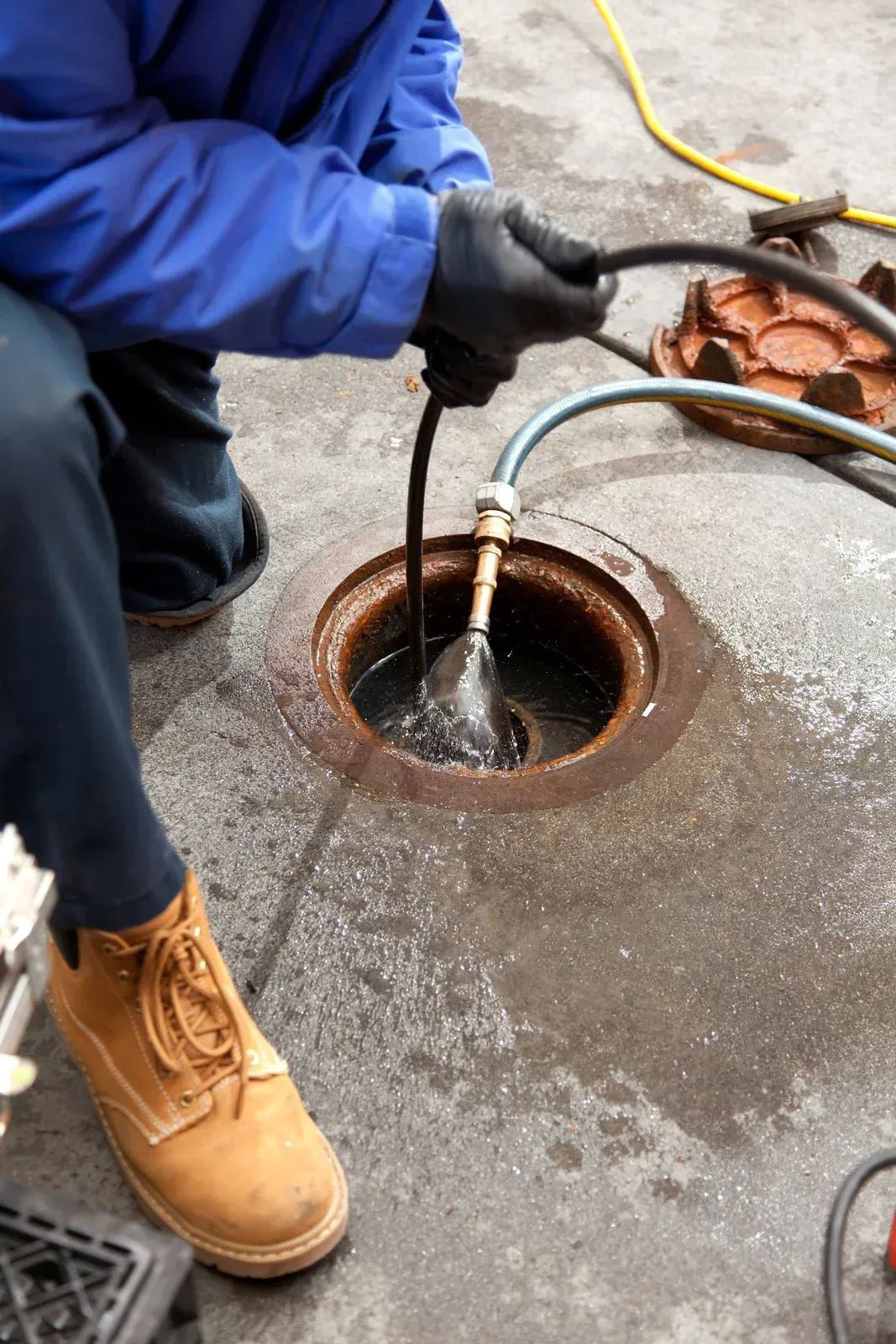
Once the picture is clear, the fix matches the failure. A cable machine with a cutting head shears roots back to the pipe wall and reopens a blocked line. Hydro jetting goes further, using high-pressure water to scour grease, scale, and root debris off the full circumference of the pipe rather than just punching a hole through the middle, which is why a jetted line stays clear longer. Both restore flow, but neither repairs a crack or a bad joint, so if the camera shows structural damage, cleaning is only a temporary measure.
When the pipe itself has failed, the remedy is replacement of the affected run, whether that is a single broken section in otherwise sound pipe or the full lateral when clay has separated at numerous joints or a belly has taken hold. New pipe restores the grade and diameter the old line lost. The camera evidence is what tells you honestly which situation you are in, so you are not paying to dig up a line that only needed a cleaning schedule, or repeatedly cleaning a pipe that is genuinely finished.
Frequently Asked Questions
How do I know if the clog is in my lateral or just one fixture?
Run water at fixtures on different levels. One slow drain means a branch line or trap. Two or more stalling together, especially downstairs, points to the shared lateral. Standing water at the cleanout confirms it.
Why does my basement drain back up first?
Waste moves by gravity, so a restriction in the lateral stacks water up behind it. That water escapes through the lowest opening available, usually a basement floor drain. Upstairs fixtures seem fine for now.
Are tree roots really a problem on a small city lot?
Yes, and lot size matters little. Roots spread far wider than the canopy, and street trees reach across a lateral's path. A hairline crack or loosened joint leaking moisture is all they need to enter.
Why do my backups get worse when it rains?
Cracks and open joints work both directions. Saturated soil after heavy rain pushes groundwater into the pipe, adding volume to a line already narrowed by roots or scale. Weather-linked backups signal structural damage.
Does hydro jetting damage old pipes?
Not when the line is camera inspected first, which is why footage comes before the nozzle. Jetting scours with water rather than scraping. Cracked sections, separated joints, or thinned walls need repair instead.
How long does a lateral replacement take?
Most residential replacements take one to three days once permits and utility locates clear. Depth, run length, and whatever sits above the pipe shape the schedule. Spot repairs on one section finish within a day.
When Every Drain Slows, Look at the Lateral
A house-wide backup is a pattern rather than a coincidence. The pipe under the yard carries every drop the building produces, so a single restriction along it shows up at every fixture at once, beginning with the lowest one. Noticing which drain overflows first, whether others gurgle when water runs, and whether rain makes the whole thing worse gives a plumber real information before any tool comes out. Those small observations narrow the search considerably.
The camera settles the rest of it. Footage from inside the line separates a root mat that a cutter can clear from a bellied or separated run that will keep failing no matter how often it gets cleaned. Malcolm Plumbing & Mechanical
has spent 35
years working on laterals across San Francisco, much of that under aging clay and cast iron, and that history is usually what distinguishes a pipe worth maintaining from one that has genuinely reached its end.